

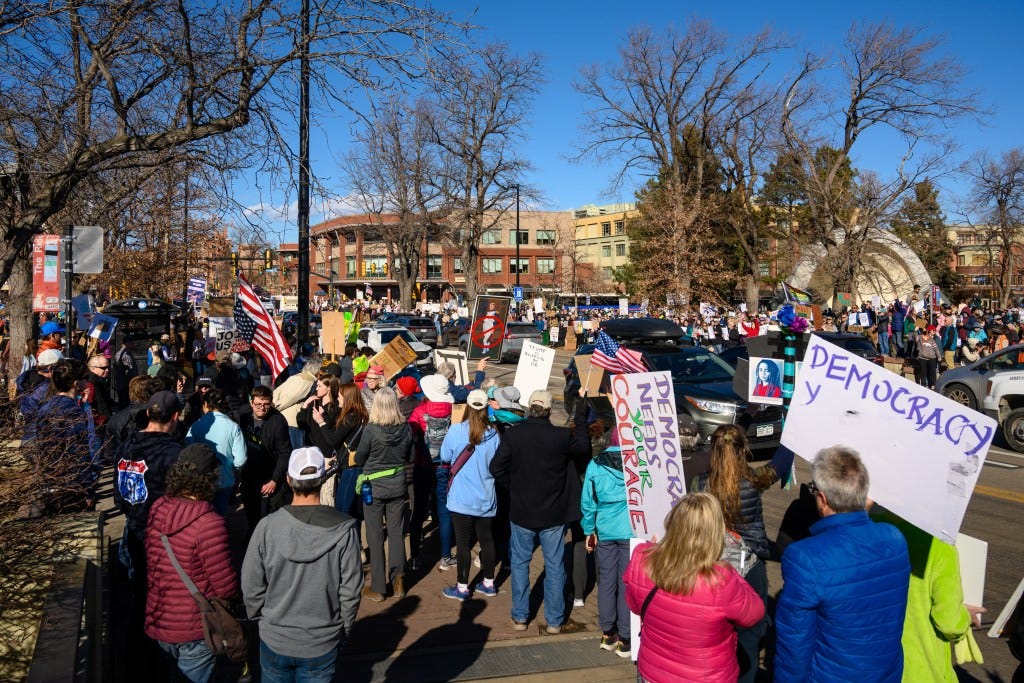
On January 30, I took the day off work to participate in the National Shutdown, in solidarity with the 50,000 people and 700 businesses in Minnesota’s Twin Cities. In my own city, teachers and students called out sick, and thousands gathered on a Friday to protest the federally mandated murders that have happened this year.
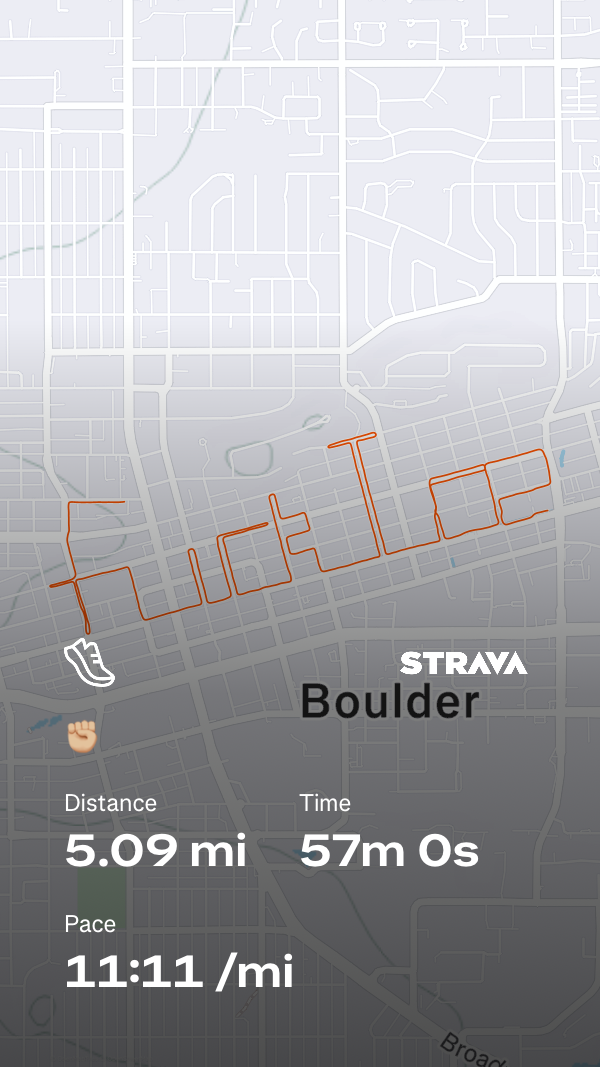
On Sunday, I ran with hundreds of people through the streets, tracing a route that, on a map, shared how we all feel. These actions, and countless others across the country, did more than generate media attention or political pressure. They reminded me and many others of something deeply important: I am not alone. I am scared. I am grieving. And so are so many others, and we are choosing to respond together.
Recently, in a conversation about the murder and demonstrations in response to the killing of Renee Good, a friend told me that protests don’t matter. I almost jumped out of my seat. Yes, they do. Collective action matters. If it didn’t, we wouldn’t see armed men trying to intimidate protestors, criminalize dissent, or suppress organizing. Power does not fear irrelevance.
History backs this up. As the Brookings Institution notes, the United States has seen numerous successful protest movements across the political spectrum, the environmental movement, women’s rights, and civil rights, all of which followed a similar pattern: clear goals, mass mobilization, political pressure, and eventual policy change. Protest works not because it produces instant results, but because it builds the conditions for transformation.
And that’s the part Americans struggle with. Protest is slow. It demands patience, strategy, coalition-building, candidate recruitment, fundraising, and sustained participation. This clashes with a culture trained for immediacy and individual gratification. We are conditioned to act in our own self-interest. Single-family homes, solo commutes, consumption as fulfillment, “personal responsibility” as moral doctrine — these norms weaken our capacity to act collectively. They atrophy the muscles required for solidarity.
We see the consequences everywhere: the erosion of labor unions, declining civic participation, and the democratic backsliding now unfolding in real time. This erosion has made way for an extreme concentration of power and wealth. When we expect things to change immediately but have limited power, we come to believe our actions don’t make a difference, and when people no longer think they can make a difference, they disengage. In that vacuum, oligarchs and autocrats rush in.
Researchers studying democratic erosion across countries found that economic inequality is one of the strongest predictors of democratic decline. As wealth concentrates at the top, trust in institutions collapses. Participation drops. Polarization deepens. Democracy weakens.
The inverse is also true. The more economic resources held by the bottom half of the population, the stronger the democracy. Researchers illustrate this by comparing Sweden and the United States. Sweden, with a far more equitable distribution of income (a Gini coefficient of 0.264)*, faces a predicted democratic erosion risk of just 4 percent. The U.S., with far greater inequality (0.384), faces more than double that risk.
Sweden didn’t arrive there by accident. In the late 19th and early 20th centuries, it was deeply unequal, ruled by a small elite. It became one of the world’s most resilient democracies through collective action: progressive taxation, strong labor rights, and expansive social welfare. The result was higher voter turnout, greater trust, political stability, and a democracy far more durable than ours.
If we want to reclaim democracy, we have to relearn how to act together. And by acting together, we can lift up the whole and rebalance power and wealth. But to do that, we have to resist the constant pull toward immediate satisfaction and self-interest and instead orient ourselves toward the whole: our communities, our neighbors, our shared future. Collective action is not optional. It is the price of a livable, democratic society.
And it starts when we show up for each other. The next time you hear about a protest, don’t sit out, show up. When you’re there, be kind, be safe, and support the collective.
_______
* The Gini coefficient is a measure of income inequality, ranging from 0 to 1, where 0 represents perfect equality (everyone has the same income) and 1 represents extreme inequality (one person holds all the wealth).